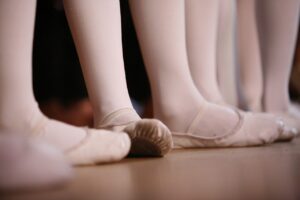
The right first-class outfit is not one particular look. It is clothing and footwear matched to the movements, floor, venue and dress code you will encounter.
A ballet class, a hip-hop session and a partner-dance lesson place different demands on an outfit. Rather than relying on one universal recommendation, use the class matrix below, test the complete outfit at home and pack a backup when the footwear rules are unclear.
You generally do not need expensive dancewear for a beginner class. Fit, security and freedom of movement matter more than brand or coordination.
Dress for the Movement, Venue, and Class Format
Start with the class description rather than your wardrobe. The dance style tells you what movements to expect, while the venue and class format determine practical details such as footwear, layers and how closely clothing needs to fit.
- Large steps and deep bends: Choose stretch fabrics and a waistband that stays in place when you lunge, squat or lift a knee.
- Turns and quick direction changes: Avoid trailing hems, unsecured layers and trousers that cover the heel.
- Floorwork: Consider whether you want coverage at the knees, legs, shoulders or torso when contacting the floor.
- Technique-focused classes: Clothing does not need to be skin-tight, but an instructor may need to see the general position of your knees, hips, shoulders and spine.
- Partner classes: Secure jewelry, hair and loose garments that could catch or strike another person.
- Warm or air-conditioned venues: Use a light removable layer rather than one heavy garment that cannot be adjusted.
Review the studio website, booking page or confirmation message. Listings on Mindbody or ClassPass may include dress-code and footwear notes, but contact the studio if the instructions are incomplete. This is particularly important for ballet, tap, ballroom and heels classes.
Also check whether changing facilities are available and whether the session is indoors, outdoors or in a multi-use hall. A fitted warm-up top or light zip hoodie can be useful before and after class, but remove it if it becomes hot, restricts movement or hides the positioning the instructor needs to observe.
What to Wear by Type of Beginner Dance Class
Use this matrix as a preparation tool, not as a substitute for the studio’s rules. Where a footwear requirement is unknown, ask before purchasing specialized shoes.
| Class type | Practical clothing | Possible footwear | Check before class |
|---|---|---|---|
| Ballet | A leotard and tights if required. For a flexible beginner dress code, fitted leggings and a close-fitting top may be accepted. | Ballet shoes are commonly specified. Do not assume socks or bare feet are permitted. | Whether the studio requires a particular uniform, shoe type or method of securing long hair. |
| Contemporary or lyrical | Fitted stretch clothing that allows floorwork, reaching and large changes of level. Select the amount of skin coverage you prefer for floor contact. | Bare feet, socks, foot thongs or dance shoes may be requested. | How much floorwork is included and whether socks are allowed on the studio floor. |
| Hip-hop or street dance | Joggers, shorts, leggings or other breathable activewear. Looser clothing can work if waistbands, cuffs and layers remain secure. | Clean sneakers if permitted, often reserved for indoor use. | Whether outdoor shoes are prohibited and whether long trouser legs interfere with footwork. |
| Jazz | Fitted activewear that allows kicks, turns and changes of level while keeping leg placement visible. | Jazz shoes, bare feet or another option may be specified. | The required shoe and whether the class includes floorwork. |
| Ballroom or salsa | Clothing that permits comfortable steps and turns. Trousers and skirts should not trail under the shoes. | The studio may accept secure everyday shoes or request dance shoes. Confirm before buying smooth-soled footwear. | Floor type, partner work, sole requirements and whether shoes must have a closed heel or secure strap. |
| Heels class | Fitted stretch clothing that remains secure during turns, leg movements and possible floorwork. Knee coverage may be useful when floor choreography is listed. | Only the heel style permitted by the class. Fashion heels are not automatically appropriate dance shoes. | Accepted heel height, shoe construction, sole type and whether beginners may attend in an alternative shoe. |
| Tap | Fitted or moderately loose clothing that keeps the ankles and lower legs unobstructed. | Tap shoes if required; some introductory sessions may state an acceptable temporary alternative. | Whether tap shoes are mandatory and whether the venue has restrictions intended to protect its floor. |
If the studio gives several acceptable options, select the one you already own and can move in comfortably. Specialized clothing can wait until you understand the class format and dress code.
Do a Movement Test Before Leaving Home
Test the complete outfit—including undergarments, socks, shoes and hair arrangement—in a clear space. The goal is to identify anything that slips, pulls, catches or requires repeated adjustment.
- Reach: Raise both arms overhead and extend them forward and to each side. Check whether the top restricts your shoulders, exposes more than you want or needs to be pulled back into place.
- Bend: Hinge forward, perform a comfortable squat and lift each knee. Confirm that the waistband stays secure, the fabric provides your preferred coverage and trouser legs do not fall beneath your feet.
- Turn: Make a slow turn in each direction. Watch for swinging jewelry, loose drawstrings, flaring layers, unsecured hair or hems that wrap around the legs.
- Step: Step forward, backward and sideways, then take several quicker steps. Your shoes should remain secure, and the clothing should not catch around your knees, ankles or heels.
- Temperature comfort: Move continuously for a short period and assess whether the outfit quickly becomes too warm. Confirm that any outer layer is easy to remove and store.
Repeat the bend and reach checks in front of a mirror if you want to assess coverage from different angles. If you would spend the class pulling up a waistband, lowering a top or moving fabric away from your feet, change that item before leaving.
The movement test is also a useful time to check unfamiliar shoes indoors on a clean, appropriate surface while following the retailer’s return conditions. Look for heel movement, cramped toes, rubbing and straps that shift or loosen.
Clothing is not a substitute for participating in the class warm-up and cool-down. If a movement causes pain, stop rather than trying to push through it. Anyone returning after an injury, recent surgery or rehabilitation, or managing significant joint or health concerns, may wish to seek individualized guidance from an appropriately qualified healthcare professional about a suitable activity level. The instructor can be told about movement restrictions but should not be expected to diagnose or treat them.
Footwear Questions to Answer Before Class
The correct amount of grip depends on the dance style, floor and studio policy. A shoe that grips heavily may make some turns difficult, while a very slippery sole can also be hard to control. Instead of choosing shoes by appearance alone, answer these questions:
- What does the studio permit? Confirm whether the class uses ballet shoes, jazz shoes, tap shoes, heels, clean sneakers, socks or bare feet.
- Are outdoor shoes allowed? Many studios require clean indoor-only footwear to keep dirt and grit off the dance floor.
- Does the shoe stay attached? Walk, step sideways and carefully lift each heel. Check that the back, laces and straps remain secure.
- Is the sole appropriate for the floor? Do not assume that more grip or a smoother sole is universally better. Ask the studio when uncertain.
- Can you feel and place your feet clearly? Bulky soles or shoes that are much larger than your usual profile may make precise placement harder.
- Do the toes and heel have a workable fit? Do not plan to complete a full class in shoes that already cause pain or significant discomfort during a basic indoor fit check.
- Is a specialized purchase necessary now? Ask whether beginners can use an approved alternative for the first session.
If specialized shoes are required, check the seller’s sizing guidance and return conditions before wearing them on a dance floor. Brands such as Bloch and Capezio make several shoe types, but the appropriate option depends on the individual fit, dance style and studio requirements rather than the brand name alone.
What to Pack in a Small First-Class Bag
A small bag can solve minor wardrobe problems without turning the class into a major packing exercise. Bring only what the venue permits and what applies to the session.
- Approved dance shoes: Carry them separately if the studio requires indoor-only footwear.
- A footwear backup: If the studio has confirmed two acceptable choices, pack the second option when practical.
- A light removable layer: A fitted warm-up top or zip hoodie can help before and after class.
- A spare fitted top: Useful if the original layer becomes uncomfortable or does not stay secure during the movement test.
- Hair ties or pins: Bring an extra in case one breaks. A ponytail, braid or bun may keep long hair away from the face, though a long ponytail can swing during turns.
- Water: Bring it if the venue allows drinks in or near the studio.
- Small personal items: Include only essentials such as a towel or any ordinary hygiene item you expect to use.
Keep valuables and bulky belongings to a minimum, particularly if storage arrangements are unknown. Arriving with your outfit already tested is more useful than bringing several unconfirmed shoe or clothing options.
Clothing Choices That Commonly Become Distracting
An item does not have to look like dancewear to work well, but it should stay out of your way. Reconsider anything that fails the reach, bend, turn or step checks.
- Stiff jeans or restrictive waistbands: These can limit bending, lunging and changes of level.
- Very baggy trousers: Excess fabric can conceal knee and foot placement or catch beneath a shoe.
- Long or trailing hems: These may move under the feet during steps and turns.
- Loose tops and unsecured layers: They may shift during reaching, turning or floorwork and require repeated adjustment.
- Heavy embellishments: Large zippers, studs or decorative pieces can add bulk and become uncomfortable during floorwork.
- Large jewelry: Hoops, long necklaces, loose bracelets and sharp-edged accessories may swing, catch on clothing or interfere with partner work.
- Unsecured hair: Hair repeatedly falling across the face can obstruct your view. Secure it in a way that also remains manageable during turns.
- Strong fragrance: Use fragrance sparingly in shared studios, especially for classes involving close partner contact.
- Unconfirmed fashion footwear: A shoe that resembles a dance shoe may still have an unsuitable sole, insecure construction or a heel style the studio does not allow.
The most dependable first-class choice is the outfit that matches the specific class, passes all five movement checks and complies with the venue’s footwear policy. If requirements remain unclear, contact the studio rather than buying several specialized items in advance.
General Activity References
The DanceFit Studio Editorial Team publishes practical, beginner-friendly content about dance fitness, home workouts, dance learning, equipment, and safer practice habits. Our guides are prepared for general educational purposes, with a focus on clear instructions, realistic routines, and accessible information for different experience levels. The content does not provide medical diagnosis or personalized treatment advice.